
Our Tests / NIPT / Optima NIPT

Overview of Optima NIPT

Optima NIPT is a clinically focused, non-invasive prenatal screening test that analyzes cell-free fetal DNA in maternal blood to assess the risk of selected chromosomal abnormalities early in pregnancy. Designed to deliver clear, reliable, and clinically meaningful results, Optima NIPT supports confident decision-making while minimizing uncertainty and unnecessary invasive procedures. Its targeted genomic approach focuses only on conditions with established clinical relevance, ensuring that every result is actionable and aligned with modern prenatal care guidelines.

Optima NIPT prenatal screening consultation

What is Optima NIPT?

Optima NIPT is a blood-based prenatal screening test that examines small fragments of fetal DNA circulating in the mother’s bloodstream.

It provides an early assessment of the risk for specific chromosomal conditions, helping guide informed discussions between prospective parents and healthcare providers.

The test can be performed from the 9th week of pregnancy and is suitable for a wide range of pregnancy types, including singleton and twin pregnancies, as well as IVF cases.
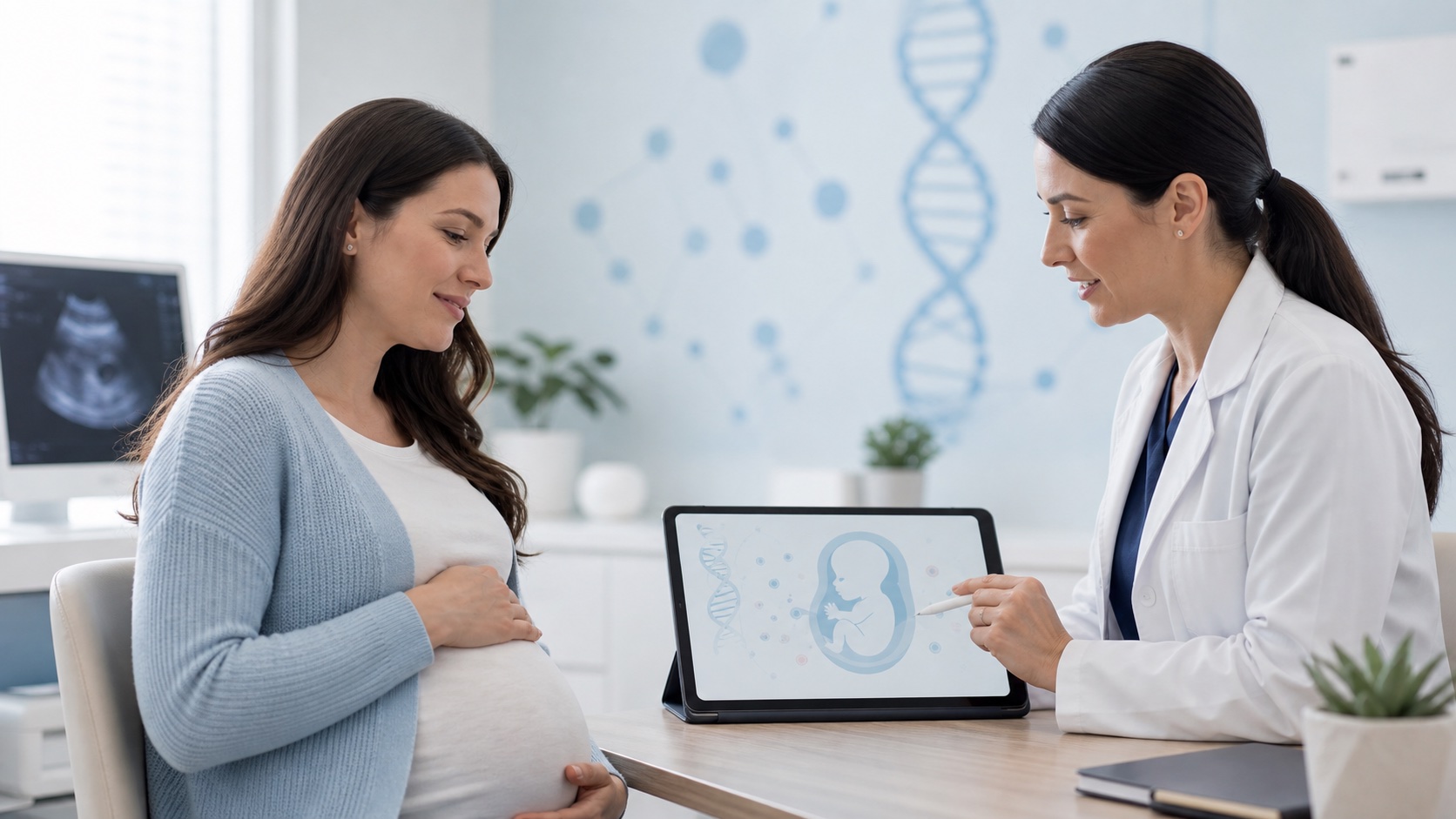
Clinician explaining prenatal genetic screening to a patient

What does Optima NIPT screen for?

Optima NIPT focuses on conditions with clear clinical relevance:

Down syndrome is a genetic condition caused by the presence of an extra copy of chromosome 21. It is associated with varying degrees of intellectual disability and may include characteristic physical features. Individuals with Down syndrome may also have associated medical conditions, such as congenital heart defects or thyroid disorders, which can require ongoing medical care. With advances in medical management, early intervention, and supportive therapies, many individuals lead active and fulfilling lives. While some pregnancies with Down syndrome may result in miscarriage, it remains one of the most commonly occurring chromosomal conditions identified in prenatal screening.

Edwards syndrome is caused by an extra copy of chromosome 18 and is associated with severe developmental and medical complications. Affected pregnancies have a high likelihood of miscarriage or stillbirth. Babies born with this condition often have significant health challenges, including heart defects, growth restriction, and organ abnormalities. Survival beyond the first year of life is uncommon, and those who do survive typically require intensive medical support.

Patau syndrome results from an extra copy of chromosome 13 and is associated with severe intellectual and physical abnormalities. Common findings include brain and heart defects, cleft lip or palate, and other organ malformations. Many affected pregnancies result in miscarriage or stillbirth. Infants born with trisomy 13 often have a limited life expectancy and require specialized medical care.

Turner syndrome (Monosomy X) affects females and may be associated with short stature, infertility, and certain medical conditions such as heart or kidney abnormalities.

Triple X (XXX) is often associated with mild or no physical symptoms, though some individuals may experience learning or developmental differences.

Klinefelter syndrome (XXY) affects males and may be associated with reduced fertility, learning difficulties, and hormonal differences

Jacobs syndrome (XYY) is often associated with mild or no physical symptoms, though some individuals may experience learning or developmental differences.

XXYY syndrome is a rare sex chromosome condition that occurs in males when there are two extra chromosomes (XXYY instead of XY). It is associated with developmental differences, including speech and learning difficulties, as well as behavioral and social challenges. Some individuals may also have medical features such as low testosterone levels, which can affect puberty and fertility. The severity and combination of features can vary between individuals. With appropriate medical care, educational support, and early intervention, many individuals with XXYY syndrome can make meaningful developmental progress and lead fulfilling lives.

This condition is caused by a small missing segment of chromosome 22 and can affect multiple systems in the body. It is commonly associated with heart defects, immune system differences, and developmental delays. The severity can vary significantly between individuals. Early diagnosis allows for appropriate medical management and developmental support.

1p36 deletion syndrome is caused by a missing segment at the end of chromosome 1. It is associated with developmental delay, intellectual disability, and, in some cases, seizures or heart conditions. The clinical presentation can vary, and early intervention can help improve developmental outcomes.

This condition is caused by a deletion on chromosome 4 and is associated with growth restriction, developmental delay, and characteristic facial features. Medical complications can include seizures and congenital anomalies. The severity varies, and care typically involves multidisciplinary support.

Smith–Magenis syndrome is a developmental condition caused by a deletion on chromosome 17. It is associated with intellectual disability, behavioral differences, and sleep disturbances. Early diagnosis allows for better management of symptoms and supportive care.

Cri-du-chat syndrome is caused by a deletion on chromosome 5. It is named after the characteristic cry observed in some affected infants. The condition is associated with developmental delay, intellectual disability, and distinct facial features. Supportive care and early intervention can improve quality of life.

Prader–Willi syndrome is a genetic condition affecting appetite regulation, growth, and development. Infants may have low muscle tone and feeding difficulties, while later in life, individuals may develop increased appetite and require careful management to prevent obesity. With appropriate care and monitoring, individuals can benefit from structured support and therapies.

Angelman syndrome is a neurological condition characterized by developmental delay, speech impairment, and movement or balance difficulties. Individuals often have a happy demeanor and may experience seizures. Early diagnosis and supportive therapies can significantly improve quality of life.

Why choose Optima NIPT?

Clinically Focused Approach

Targets only genomic regions with proven clinical relevance, avoiding unnecessary or uncertain findings.

High Accuracy

Demonstrates high sensitivity and specificity (>99%) for common trisomies.

Clear, Actionable Results

Reports are designed to support straightforward interpretation and clinical decision-making.

Reduces Unnecessary Invasive Testing

Minimizes false positives and ambiguous findings, helping avoid unnecessary procedures.

Validated for Real-World Use

Suitable for singleton for all 13, 18, 21, X, Y chromosomal anomalies and microdeletions, and for twin/vanishing twin for all except X, Y aneuploidies. The same applies for IVF self-pregnancies and IVF-donor egg used and surrogate pregnancies.

How is Optima NIPT different?

  • Unlike broad whole-genome screening approaches, Optima NIPT is a proprietary technology that uses targeted capture enrichment and high read-depth sequencing to focus on clinically meaningful regions of the genome.
  • Greater precision
  • Reduced noise and false positives
  • Clearer, more reliable results
  • The result is a test designed not to maximize the number of findings, but to maximize clinical value.

Who can consider Optima NIPT?

  • Pregnant individuals from 9th weeks gestation
  • Suitable for all maternal ages and risk groups
  • Applicable to singleton and twin pregnancies
  • Compatible with IVF pregnancies (including self-egg, donor-egg and surrogate cases)

What to expect?

  • Simple blood draw from the mother
  • No risk to the fetus
  • Results typically available in 5–7 working days
  • Clear classification of results

Important Considerations

Optima NIPT is a screening test, not a diagnostic test.

Any high-risk result should be confirmed with diagnostic testing such as amniocentesis.

References

  1. Dungan JS, Klugman S, Darilek S, et al. Noninvasive prenatal screening (NIPS) for fetal chromosome abnormalities in a general-risk population: an evidence-based clinical guideline of the American College of Medical Genetics and Genomics (ACMG). Genet Med. 2023;25(2):100336.
  2. ACOG Committee on Practice Bulletins. Screening for fetal chromosomal abnormalities. Obstet Gynecol. 2020;136(4):e859-e867.
  3. Hui L, Maron JL, Bianchi DW, et al. Position statement from the International Society for Prenatal Diagnosis on the use of non-invasive prenatal testing for the detection of fetal chromosomal conditions in singleton pregnancies. Prenat Diagn. 2023;43(7):814-828.
  4. Kypri E, Tsangaras K, Achilleos A, et al. Non-invasive prenatal testing of fetal chromosomal aneuploidies: validation and clinical performance of the Veracity test. Mol Cytogenet. 2019;12:34.

Contact Us

Is Optima NIPT Right For You?

We're here to help you find out.

You can unsubscribe from marketing communications at any time.